Rose Petal for Skin: Uses in Ayurveda & Face Packs
Also known as Gulab, Gulab ki pankhuri, Shatapatri, Damask rose · Rosa damascena
Gulab is part of Indian weddings, temples and summer kitchens. Here is how rose petal powder is traditionally used in face packs and ubtans, and how to use it safely.
Few ingredients feel as Indian as gulab. Rose petals are scattered at weddings, strung into garlands for the temple, stirred into gulkand and distilled into the gulab jal that sits in so many bathroom cabinets. In Sanskrit the rose is called shatapatri, the flower of a hundred petals.
Dried and milled, rose petals also have a long place in face packs and ubtans. This guide covers what rose petal powder is, its traditional place in Ayurveda, how it is commonly used, the formula of ours that contains it and how to use it safely.
What is rose petal powder?
The damask rose, Rosa damascena, is the fragrant pink rose most prized for rose water and rose oil. In India it is grown in places such as Kannauj in Uttar Pradesh and Pushkar in Rajasthan, both known for their rose water and attar traditions. For skin care, the petals are dried in the shade and ground into a soft, fragrant powder.
Rose in Ayurveda
In Ayurveda, the rose is described as cooling and pleasant, qualities traditionally associated with balancing pitta, the dosha linked to heat. That is one reason rose water, gulkand and rose sherbet are so popular in the Indian summer. In beauty rituals, rose has long been valued for its comforting feel and gentle fragrance.
Rose brings something few other ingredients do: the sense that a face pack is a small indulgence, not a chore.
How rose petal is commonly used
- Face packs: rose petal powder mixed with besan, sandalwood or clay and a little rose water or milk.
- Ubtans: blended with besan, turmeric and almond powder before festivals and weddings.
- Rose water: used as a light toner or as the liquid for mixing packs.
- Bath rituals: fresh petals floated in warm bath water.
Rose petal in our formulas
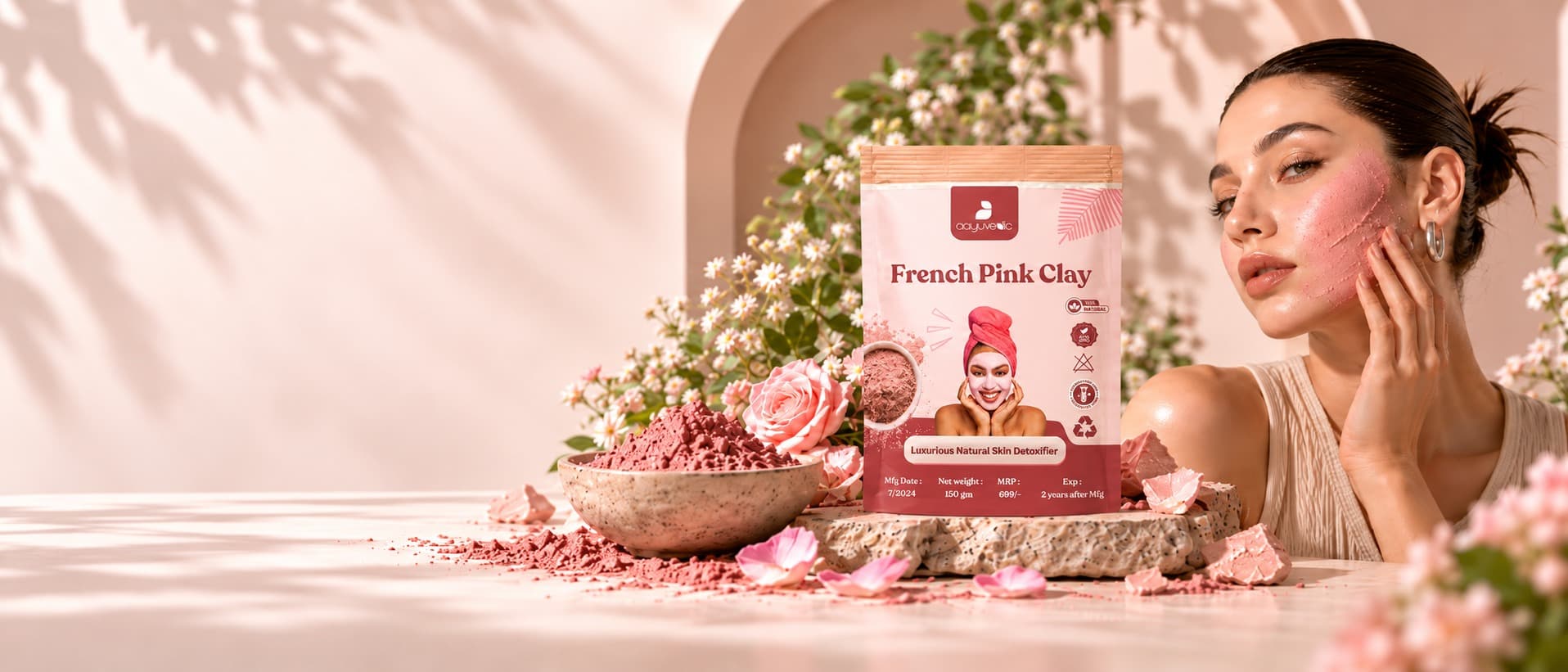
Rose petal is one of the ingredients in our French Pink Clay face mask, where it is blended with pink clay and aloe vera. Mix it fresh and follow the pack directions for timing and frequency.
Safety notes
- Patch test any rose-based pack or toner for 24 hours, especially if you react to fragrance.
- If you are allergic to roses or flower pollen, avoid rose petal products.
- Choose rose water without added synthetic fragrance or alcohol if your skin is sensitive.
- Stop use if you notice itching, redness or a rash.
Questions people ask
Yes. Wash fresh, unsprayed rose petals, dry them completely in the shade for several days until they crumble, then grind them in a clean, dry mixer and sieve. Store the powder in an airtight glass jar away from moisture. Use petals from a source you trust, as florist roses are often sprayed.
Many people use plain rose water every day as a light toner, splashed on or applied with a cotton pad after cleansing. Look for one with a short ingredient list, ideally just rose distillate. If your skin is sensitive, patch test first and choose a product without added fragrance or alcohol.
Rose petal powder pairs well with besan, sandalwood, multani mitti or pink clay, and with liquids such as rose water, milk or curd. Keep combinations simple, with two or three ingredients, so it is easy to tell what suits your skin. Make a fresh batch each time and rinse before it dries completely.
The Wellness Journal is for general education and inspiration only. It isn’t medical advice — please speak to a doctor or qualified Ayurvedic practitioner about any health concern, and patch test new products before use.
Formulas with rose petal
Read each pack’s ingredients and directions before use.