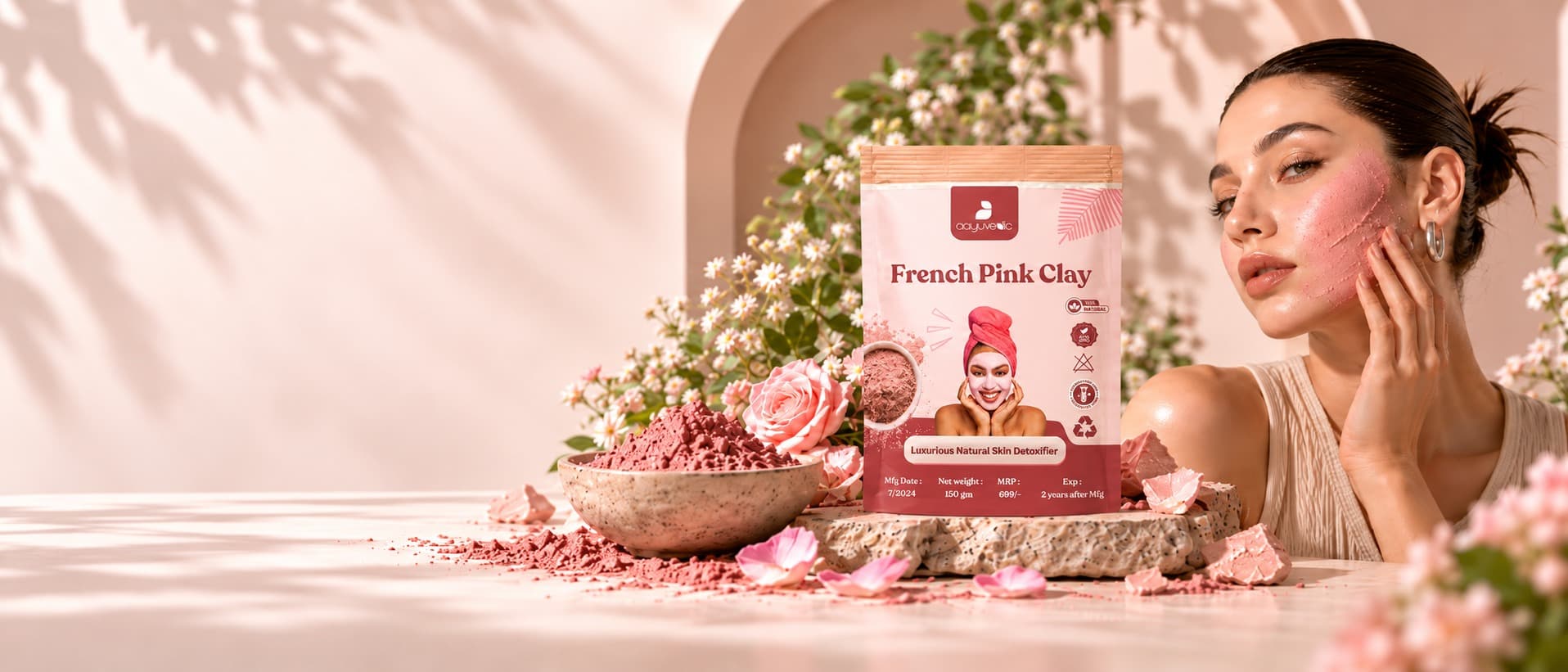
French Pink Clay for Face: Uses & How to Apply
Also known as Pink clay, Rose clay, Pink kaolin, Gulabi mitti
A gentle blend of kaolin and red clays, French pink clay is a modern cousin of the multani mitti pack. Learn how to mix it, apply it and use it safely.
French pink clay is a soft, rosy powder that has become a favourite in face masks. It is made by blending white kaolin with red clay, which gives it its gentle pink colour and a texture that feels milder than many other clays.
Clay is nothing new in Indian homes: multani mitti face packs have been around for generations. This guide covers what pink clay is, how it relates to traditional earth-based care, how to use it, the formula we make with it and the safety points worth knowing.
What is French pink clay?
Pink clay is not a single mineral but a blend. White kaolin, a soft and fine clay, is combined with red clay, whose colour comes from naturally occurring iron oxides. The word French refers to the cosmetic clays long associated with French spa traditions; similar clays are now sourced from several countries.
Because kaolin is one of the gentler cosmetic clays, pink clay is often chosen by people who find stronger clays too drying.
Clay in Ayurveda and Indian home care
Ayurveda and Indian folk traditions have long used mrittika, or earth, in external care, from mud packs to clay-based ubtans. The most familiar example is multani mitti, or Fuller's earth, a staple of summer face packs. Pink clay is a modern addition rather than a classical Ayurvedic ingredient, but it fits naturally into the same habit of simple, rinse-off clay masks.
How to use a pink clay mask
- Mix one to two teaspoons of clay with rose water or plain water in a glass or ceramic bowl to make a smooth paste.
- Apply a thin, even layer to clean skin, avoiding the eyes and lips.
- Leave it on for about ten minutes, until it is just beginning to set.
- Rinse with lukewarm water and follow with a light moisturiser.
Pink clay in our formulas
Our French Pink Clay face mask is a powder mask that blends pink clay with rose petal and aloe vera. You mix it fresh with rose water or water each time; follow the pack directions for quantity, timing and frequency.
Safety notes
- Patch test on your inner forearm or jawline before first use.
- Avoid broken, sunburnt or irritated skin, and keep the paste away from your eyes.
- Use clay masks once or twice a week; overuse can leave skin feeling dry.
- Avoid breathing in the dry powder; mix it gently and keep it away from children.
- If you have a skin condition, check with a dermatologist before using clay masks.
Questions people ask
Once or twice a week suits most people. If your skin feels dry or tight afterwards, cut back to once a week and follow with a moisturiser. In hot, humid months some people with oilier skin prefer twice a week; in dry winter weather, less often may feel more comfortable.
Multani mitti, or Fuller's earth, is a strongly absorbent clay that many people with oilier skin love. Pink clay is a blend of kaolin and red clay and is generally considered milder, which makes it a popular choice for normal, dry or easily sensitised skin. Both are rinse-off clays; patch test either before use.
Rose water is the classic choice and pairs well with the clay's gentle feel. Plain water works too. For a creamier mask, some people add a little aloe vera gel or curd. Avoid lemon juice or strong essential oils, which can irritate, and always mix a fresh batch each time.
Pink clay is one of the gentler clays, but sensitive skin can still react. Patch test first, keep the mask on for a shorter time, around five to eight minutes, and rinse before it dries. If you notice stinging, redness or itching, rinse it off at once and stop using it.
The Wellness Journal is for general education and inspiration only. It isn’t medical advice — please speak to a doctor or qualified Ayurvedic practitioner about any health concern, and patch test new products before use.
Formulas with french pink clay
Read each pack’s ingredients and directions before use.