Turmeric for Skin: Uses in Ayurveda & Skin Care
Also known as Haldi, Haridra, Kasturi haldi, Manjal · Curcuma longa
Haldi, or haridra, is India's golden kitchen spice and wedding-ritual staple. Here is how it is traditionally used on skin, how to avoid stains and where it appears in our oils.
Turmeric, known across India as haldi and in Sanskrit as haridra, is the most familiar golden ingredient in Indian homes. It colours dal and sabzi, goes into a warm glass of haldi doodh on winter nights and turns up, mixed with besan, in the ubtan applied before a wedding.
This guide looks at what turmeric is, how it has been valued in Ayurveda and Indian beauty rituals, how people commonly use it on skin and which of our formulas include it. It is general information, not medical advice.
What is turmeric (haldi)?
Turmeric is the rhizome, or underground stem, of Curcuma longa, a leafy plant of the ginger family. The rhizomes are boiled, dried and ground into the bright yellow powder sold in every kirana store. India is the largest grower of turmeric, with well-known varieties from regions such as Erode in Tamil Nadu, Sangli in Maharashtra and Lakadong in Meghalaya.
Its colour comes from curcuminoids, natural pigments that also give turmeric its habit of staining whatever it touches.
Turmeric in Ayurveda and Indian rituals
Classical Ayurvedic texts describe haridra as warming and slightly bitter, and it has been used for centuries in herbal pastes and oils for the skin. It also carries deep cultural meaning: haldi is considered auspicious, which is why the haldi ceremony before a wedding is one of the most joyful rituals in many Indian families.
In many Indian homes, haldi is less an ingredient than a blessing: part of the kitchen, the puja thali and the wedding ritual alike.
How turmeric is commonly used on skin
- Ubtan: a pinch of turmeric with besan, a little curd or milk and rose water, applied as a paste and rinsed off.
- Face packs: added in small amounts to clay or sandalwood packs.
- Oils: infused into herbal oils for massage and face care.
- Kasturi manjal: in South India, wild turmeric (Curcuma aromatica) is often preferred for the face because it stains far less.
Turmeric in our formulas
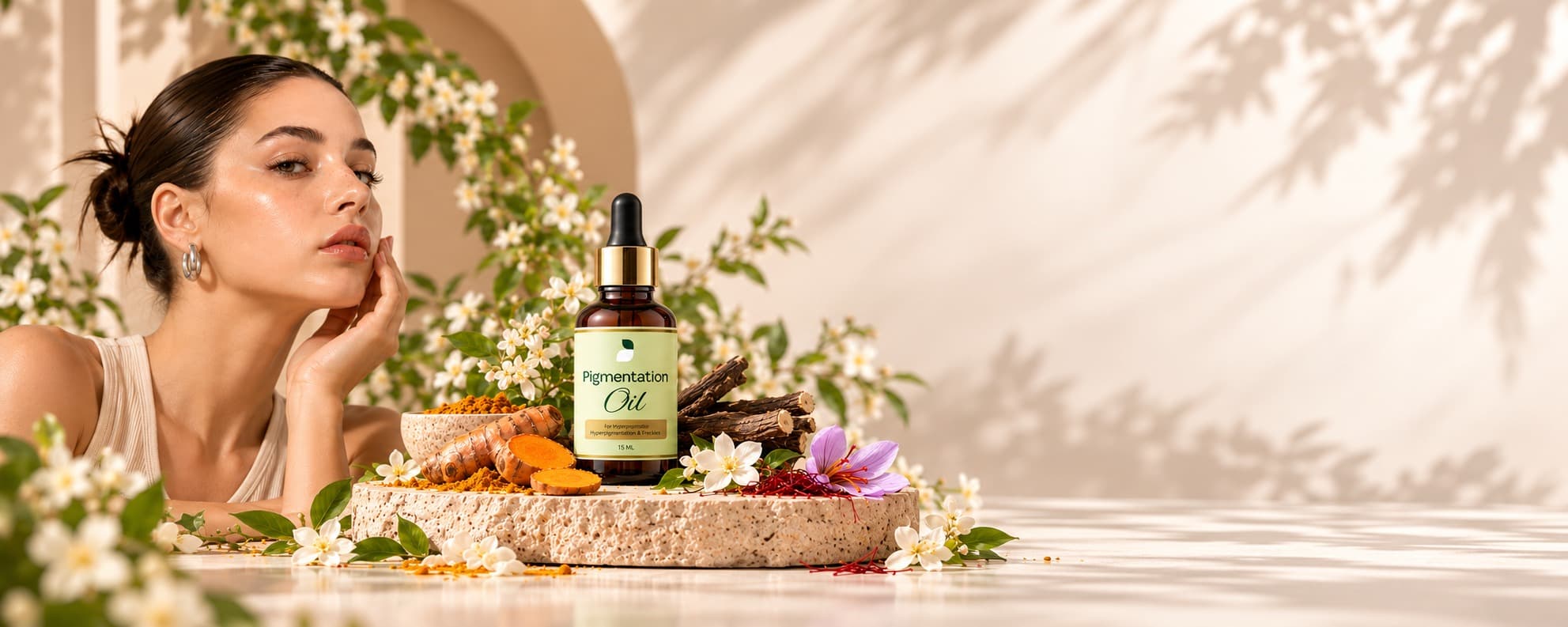
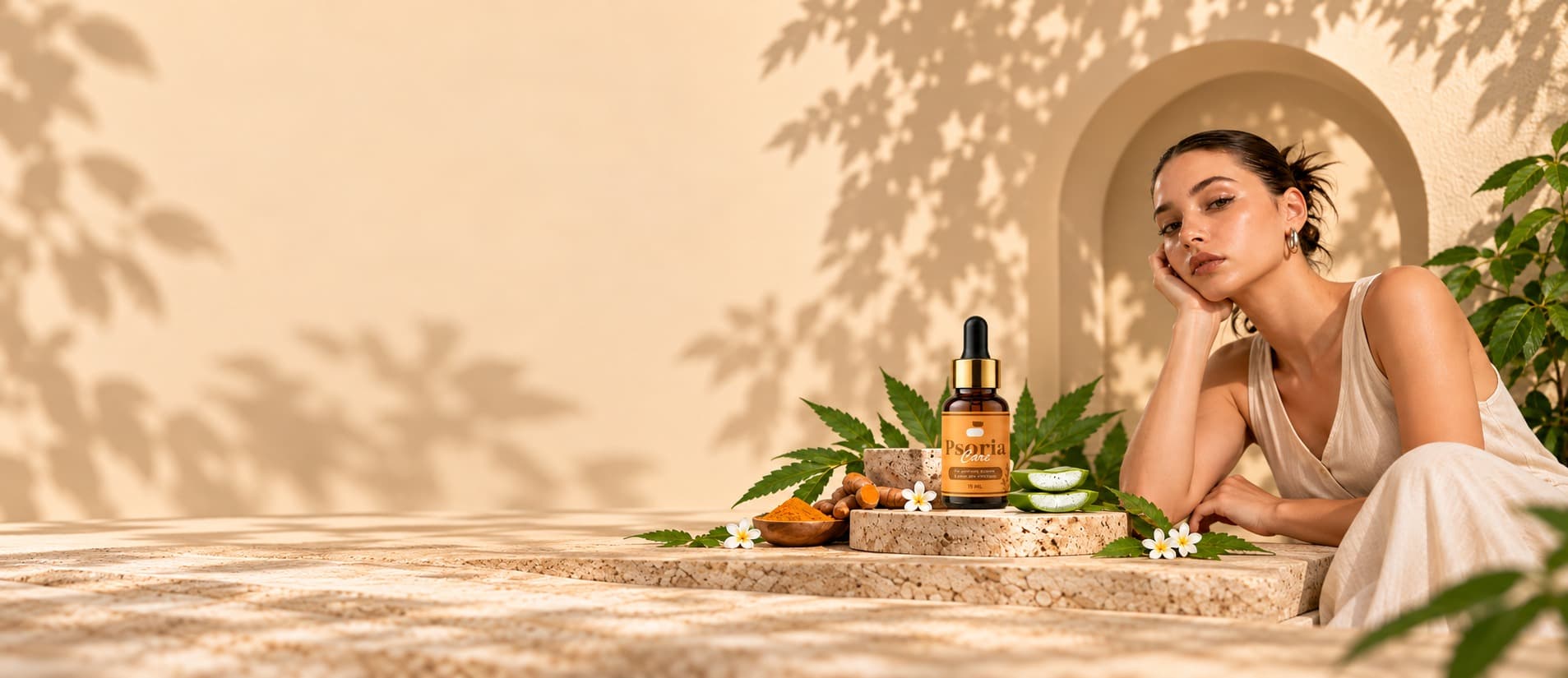
Turmeric is one of the key ingredients in two of our oils: Pigmentation Oil, a face oil that pairs it with Kumkumadi and licorice, and Psoria Care, a skin oil that pairs it with neem and aloe vera. Use each as part of a gentle routine and follow the pack directions.
Safety notes
- Patch test on your inner forearm and wait 24 hours before using turmeric on your face.
- Turmeric stains skin, nails, clothes and fabrics; rinse thoroughly and use an old towel.
- Avoid applying it on broken, sunburnt or irritated skin, and stop if you notice itching, redness or burning.
- If you are pregnant, breastfeeding or on medication, check with a doctor or qualified Ayurvedic practitioner first.
Questions people ask
Most people use turmeric as part of an occasional face pack, once or twice a week, rather than daily. A small pinch mixed with besan, curd or rose water is the traditional approach. Patch test first, rinse well to avoid a yellow tint, and stop if your skin feels irritated or tight afterwards.
Rinse the pack off with lukewarm water, then wipe the area gently with a cotton pad dipped in raw milk or a little curd, and wash again with a mild cleanser. Keeping the quantity to a pinch, and rinsing before the pack dries completely, also helps limit the yellow tint.
Regular haldi comes from Curcuma longa and is the cooking turmeric found in every kitchen. Kasturi haldi, or kasturi manjal, is wild turmeric, Curcuma aromatica. It is pale cream rather than deep yellow, has a distinct fragrance and is traditionally preferred in South India for face packs because it stains much less.
No. Turmeric is a traditional beauty and kitchen ingredient, not a treatment. If you have acne, persistent redness, rashes or patches that itch or spread, please see a dermatologist. Home face packs are best kept for healthy skin and used alongside, never instead of, professional advice.
The Wellness Journal is for general education and inspiration only. It isn’t medical advice — please speak to a doctor or qualified Ayurvedic practitioner about any health concern, and patch test new products before use.
Formulas with turmeric
Read each pack’s ingredients and directions before use.