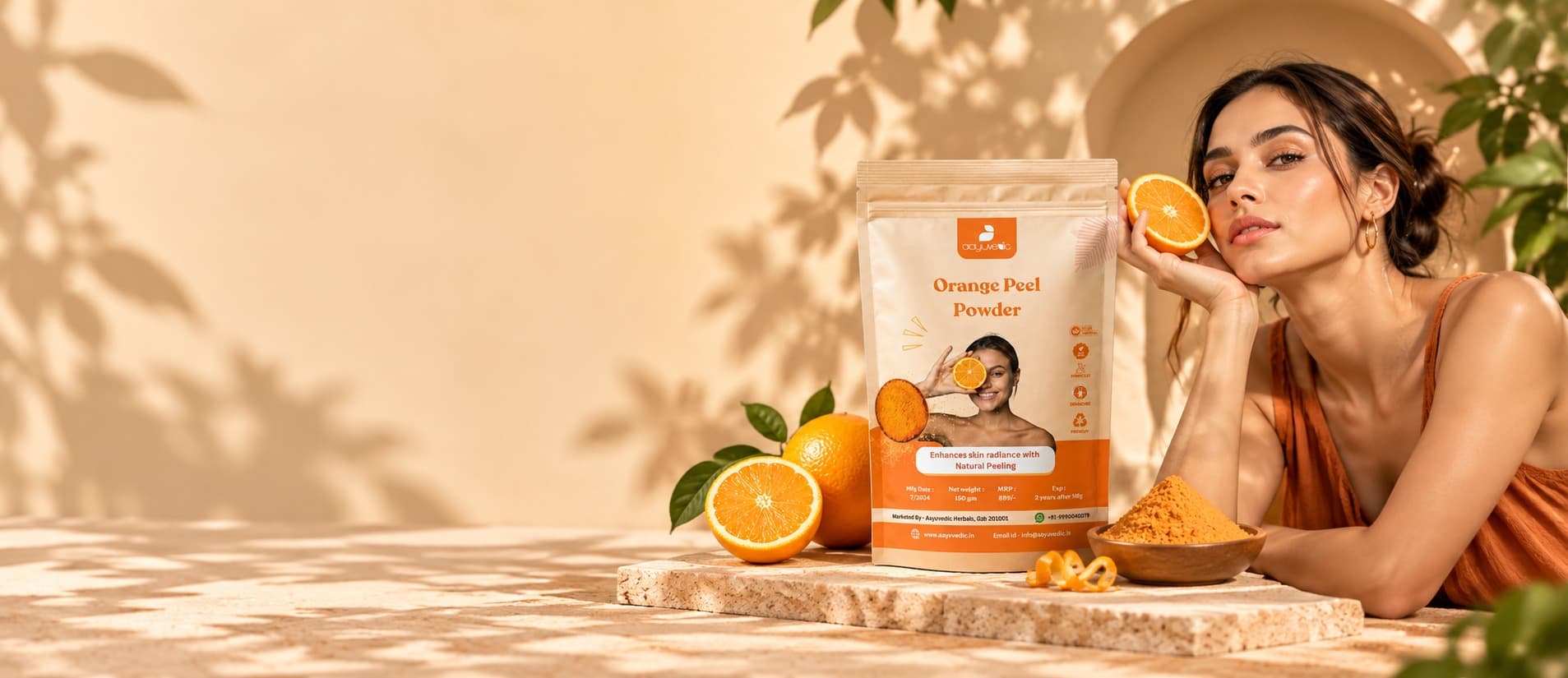
Orange Peel Powder for Face: Uses & Face Packs
Also known as Santra chilka, Santre ka chilka, Naranga, Orange peel powder · Citrus sinensis
Sun-dried santra peels are a classic Indian winter project. Learn how orange peel powder is used in face packs and ubtans, and how to use it safely.
In many Indian homes, orange peels never go straight into the bin. In winter, when santras are piled high at every fruit stall, the peels are spread out on a plate in the sun, dried until crisp and ground into a fragrant powder for face packs. In Hindi the peel is santre ka chilka, and in Sanskrit the orange is called naranga.
This guide explains what orange peel powder is, its place in Indian home rituals, how it is commonly used, the formula of ours that contains it and the safety points worth knowing before you try it.
What is orange peel powder?
Orange peel powder is made from the dried rind of oranges such as the sweet orange, Citrus sinensis. In India, the word santra is used loosely for both sweet oranges and the mandarin-type oranges grown around Nagpur, and the peels of both are dried at home. The peel holds the fruit's aromatic oils, which give it its zesty fragrance, and is naturally rich in vitamin C and plant compounds called flavonoids.
Orange peel in Indian home care
Orange peel is a home-care favourite rather than one of the oldest herbs of classical Ayurveda, but citrus fruits and their peels have a long place in Indian kitchens and beauty rituals. Dried peel is a traditional winter project, used in ubtans and face packs and sometimes added to bath powders for its fresh scent. Its appeal is simple: the peel is free, fragrant and easy to dry at home.
How orange peel powder is commonly used
- Face packs: orange peel powder mixed with curd, honey, rose water or plain water.
- Ubtans: blended with besan, a pinch of turmeric and a little milk.
- Body packs: mixed with besan for a gentle rub before bathing.
- Bath powders: added for its fresh, citrus fragrance.
Orange peel in our formulas
Our Orange Peel Powder is a pure, single-ingredient powder pack. Mix it fresh with rose water, curd or honey, and follow the pack directions for quantity, timing and how often to use it.
Safety notes
- Patch test for 24 hours; citrus can sting or irritate sensitive skin.
- Do not use on broken, sunburnt, freshly waxed or freshly threaded skin.
- Rinse the pack off well and wear sunscreen during the day, as you would with any face care routine.
- If you are allergic to citrus fruits, avoid orange peel products.
- If you have a skin condition, check with a dermatologist before using face packs.
Questions people ask
Mix one teaspoon of orange peel powder with enough curd, rose water or plain water to make a smooth paste. A few drops of honey make it creamier. Apply a thin layer to clean skin, leave it for ten to fifteen minutes and rinse with lukewarm water using light circular movements.
Daily use can feel like too much for most skin types because of its slightly grainy texture and citrus content. Once or twice a week is a more comfortable rhythm. If your skin feels tight, dry or tingly after a pack, use it less often or switch to a milder mix.
Wash the oranges well, peel them and spread the peels on a clean plate in the sun, or in a well-ventilated room, until they are completely crisp, which usually takes a few days. Grind them in a dry mixer, sieve for a fine powder and store it in an airtight jar away from moisture.
It is better to use citrus packs in the evening or on a day you are mostly indoors. Rinse the pack off thoroughly, follow with a moisturiser and apply sunscreen before stepping out. If your skin feels sensitive after a pack, give it a day's rest before the next one.
The Wellness Journal is for general education and inspiration only. It isn’t medical advice — please speak to a doctor or qualified Ayurvedic practitioner about any health concern, and patch test new products before use.
Formulas with orange peel
Read each pack’s ingredients and directions before use.